Will CBD Isolate Products Be Safest Under the New Hemp Cap?
Short answer: CBD isolate products may be among the easier hemp-derived products to keep within the new federal THC limit—but “isolate” is not a guarantee of compliance, and “THC-free” is not proof. The product’s actual cannabinoid content, the size of the container, its certificate of analysis (COA), and the rules in the states where it is sold all matter.
The approaching federal changes are especially important because the hemp definition is shifting toward total THC, including THCA, and a very small 0.4 mg per container cap. That is a much tighter test than simply asking whether a product contains less than 0.3% delta-9 THC by dry weight. There are also two dates to track: November 12, 2026, and December 11, 2026. Businesses and consumers should confirm which requirements apply to each product and transaction on each date rather than treating the rollout as one simple switch.
What Is Changing in the Federal Hemp Definition?
The familiar federal hemp threshold has focused on delta-9 THC concentration: hemp is generally distinguished from marijuana by a delta-9 THC concentration of no more than 0.3% on a dry-weight basis. That percentage test can be confusing when it is applied to finished consumer products. A large package may contain a small amount of THC and still fall below a percentage threshold by weight.
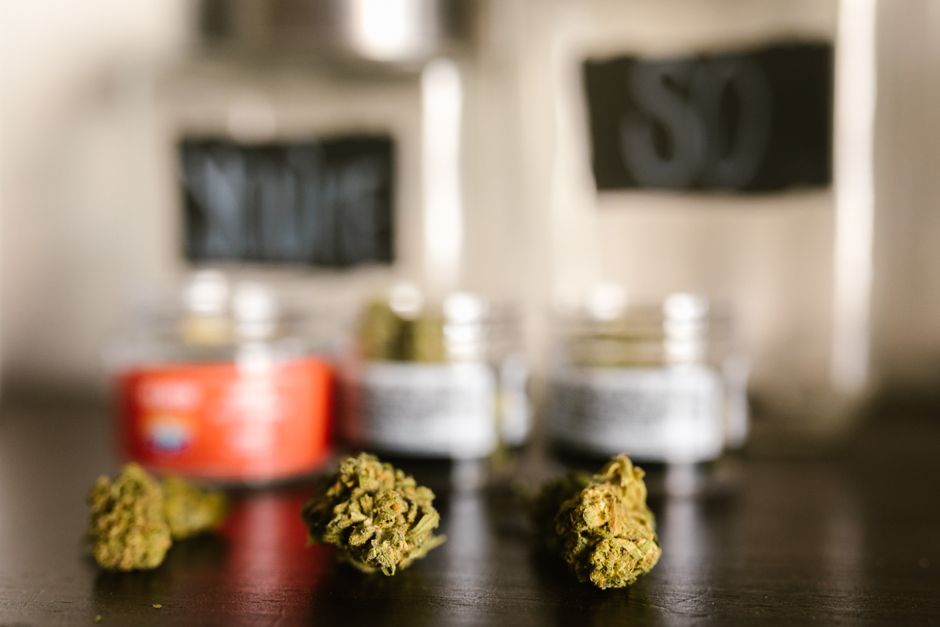
The new framework shifts attention toward total THC and the amount of THC in the product container. This matters because a test that measures delta-9 THC alone can miss THCA, a precursor that can convert to delta-9 THC when heated. In other words, a product with little delta-9 THC on its COA may still have meaningful THC potential if the lab report does not account for THCA.
When calculating total THC, labs commonly use the conversion factor 0.877 to account for the weight lost when THCA converts to delta-9 THC:
Total THC = delta-9 THC + (THCA × 0.877)
For example, if a product tests at 0.20 mg delta-9 THC and 0.25 mg THCA per container, the estimated total is:
0.20 mg + (0.25 mg × 0.877) = about 0.42 mg total THC
That would be above a 0.4 mg per-container cap, even though the delta-9 result alone is only 0.20 mg. The actual compliance calculation should follow the applicable law and testing method, but the example shows why a delta-9-only result is not enough.
Why 0.4 mg per Container Is a Stricter Test
A container-based limit focuses on the total amount in the package, not just the amount in one serving or the product’s percentage by weight. That changes the practical math for tinctures, gummies, capsules, and other products sold in multi-serving packages.
Example Per serving Servings per container Total per container Compared with 0.4 mg cap 10-serving product 0.03 mg THC 10 0.30 mg Below the cap, based on this simplified example 20-serving product 0.03 mg THC 20 0.60 mg Above the cap, based on this simplified exampleA product can therefore look low in THC on a per-serving basis but exceed the container limit once all servings are added together. A “one serving” statement does not change how much cannabinoid is physically in the usaenlinea package. Consumers should look for a COA that reports the product’s total THC in a way that can be compared with the whole-container limit—not just a number per gummy or per dropper.
Are CBD Isolate Products More Likely to Fit?
Often, yes—but not automatically. CBD isolate is intended to contain cannabidiol separated from other hemp compounds. Because it is not meant to include the broad range of cannabinoids found in full-spectrum extracts, a well-made isolate product may be easier to formulate with very low THC than a full-spectrum product.
But a product labeled “CBD isolate” can still have detectable THC due to manufacturing carryover, contamination, inaccurate formulation, or a testing problem. The label describes an ingredient or product style; it does not establish the finished product’s measured THC content. The finished batch needs appropriate third-party lab testing, and the COA should identify the batch that is actually being sold.
What “CBD Isolate No THC” Should Mean
The phrase “CBD isolate no THC” is a marketing phrase unless it is backed by a current, relevant lab result. Even a lab report showing “ND” (not detected) does not necessarily prove absolute zero. “Not detected” means the lab did not detect the analyte above its reporting limit using that method. The reporting limit matters: one laboratory may be able to detect a lower amount than another.
For a stronger check, look for a non-detect COA that:
- Matches the product’s batch or lot number.
- Reports delta-9 THC and THCA—not just delta-9 THC.
- Shows the lab’s reporting limits or limits of quantitation.
- Provides results in units that can be understood for the full container.
- Comes from an independent laboratory and has a recent test date.
“THC-free” is a label phrase that often confuses people. It may mean the result was below a lab’s detection threshold, not that every molecule of THC is absent. A COA that omits THCA, or that is for a different batch, cannot support a confident conclusion about the product in hand.
How to Understand the Two-Phase Rollout
The dates November 12, 2026, and December 11, 2026, should be treated as distinct checkpoints in the rollout—not as interchangeable deadlines. The exact effect of each date can depend on the relevant statutory provision, agency implementation, and product or transaction at issue. Businesses should review the controlling federal text and current agency guidance before making inventory, labeling, or sales decisions.
- By November 12, 2026: Prepare for the federal hemp-definition changes and the move toward total-THC accounting. Review formulations, testing specifications, supplier documentation, labels, and inventory practices.
- By December 11, 2026: Check the additional transition or implementation requirements that apply by this date. Confirm whether any enforcement, distribution, or product-specific provisions affect the products being sold.
These dates do not mean every product is automatically compliant until one date and prohibited the next. A product may be subject to other federal requirements, state restrictions, or retailer policies before either checkpoint. Because laws and agency guidance can change, businesses should verify the current rules close to each date and avoid relying on an old blog post, old label, or old lab report.
How Retailers and Consumers Can Check a Product
For Consumers
- Scan the QR code or request the COA for the exact batch you are buying.
- Check whether both delta-9 THC and THCA are listed.
- Look for a total THC calculation or enough information to calculate it.
- Compare the result with the whole-container amount, not only the serving amount.
- Ask what “non-detect” means for that lab’s reporting limit.
For Retailers
- Keep batch-matched COAs accessible, such as in a QR-code COA binder.
- Ask suppliers for updated third-party lab testing when formulas or batches change.
- Flag COAs that list only delta-9 THC or that do not identify THCA.
- Train staff to explain the difference between “not detected” and “zero.”
- Review state rules separately; federal compliance does not guarantee that a product is allowed everywhere.
Brands such as Joy Organics may offer products marketed as broad-spectrum or THC-free, but consumers should evaluate any specific product using its current, batch-specific COA. A brand name or product category cannot substitute for the lab result.
Is Isolate the “Safest” Choice?
If “safest” means more likely to stay below a strict THC cap, a properly formulated CBD isolate product with a current non-detect COA may be a sensible option to investigate. Isolate products generally have a clearer path to very low THC than products designed to retain a wider range of hemp cannabinoids.
But “safest” can mean different things: lowest chance of THC exposure, lowest legal risk, or best fit for a person’s health needs. No product label alone can guarantee any of those outcomes. Testing limits, batch variation, serving size, container size, state law, and personal circumstances all matter. People who must avoid THC for work, drug testing, medical, or other reasons should not assume that “hemp-derived,” “isolate,” or “THC-free” means zero risk.

The Bottom Line
CBD isolate products may be among the easier hemp products to keep under the new 0.4 mg per container limit, but only if the finished product’s test results support that conclusion. The shift to total THC makes THCA important, and the 0.877 conversion factor explains why a delta-9-only result can understate a product’s THC potential. Always check the complete, batch-specific COA and do the per-serving versus per-container math.
As November 12 and December 11, 2026, approach, brands and retailers should verify the current legal text and implementation guidance for each phase. Consumers should look beyond reassuring phrases and ask for evidence: a current COA, both delta-9 THC and THCA results, clear reporting limits, and a container-level total.